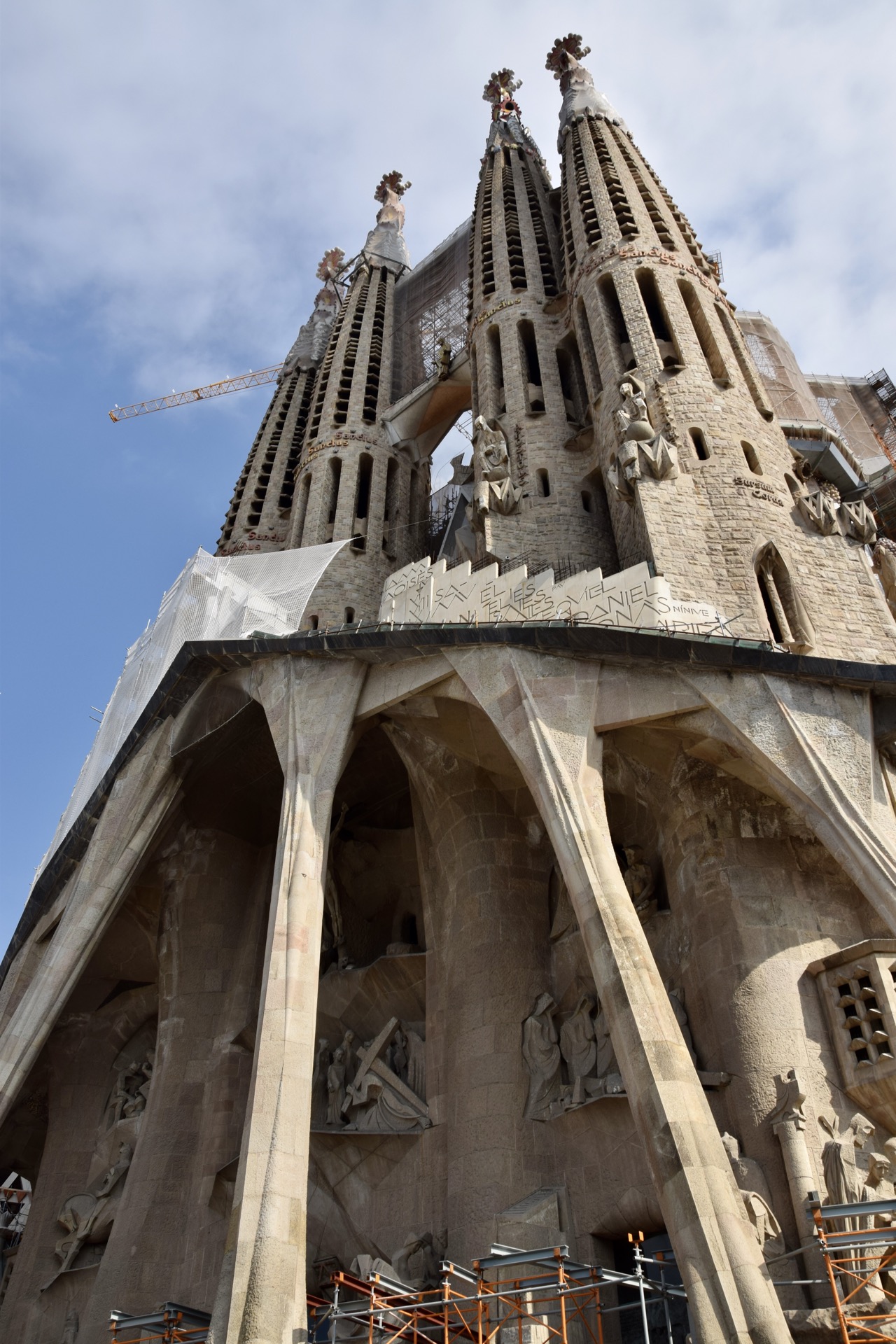
If the Nativity façade opens like an illuminated garden, the Passion façade on the western elevation closes like a clenched jaw. Angular colonnades, harsh undercuts, and figurative scenes carved with plane-first geometry give Carrer de Sardenya a different moral weather. This guide treats that geometry as primary — sculpture as consequence of shadow, column, and void — so visitors can understand why the Passion side feels cooler, sterner, and strangely modern even when depicting ancient narrative.
West light and the theatre of shadow
Afternoon sun strikes the Passion façade with theatrical clarity. Planes that look merely severe at noon become deep relief after three o’clock, when voids darken and the bone-column metaphor intensifies. Photographers know this; careful observers should too. The façade is designed for light to hurt a little — not literally, but optically — so that narrative cruelty and architectural language reinforce each other.
Standing mid-block, notice how the porch structure creates a threshold of darkness before the sculpted Passion cycle fully reveals itself. Entering that shadowed porch from bright pavement is itself a sensory preface: eyes adjust, chatter softens, stone cools. The Passion programme begins before the first recognizable figure appears.
Columns like bone
Subirachs’ contributions and the façade’s overall language lean into skeletal metaphors: tilted shafts, interstitial voids, a refusal of soft vegetal modelling. Compared with the Nativity’s continuous growth metaphors, Passion geometry prefers fracture and weight transfer made visible. Load paths feel exposed. Joints feel deliberate and unsentimental.
This does not erase figurative storytelling. Scenes of the Last Supper, the betrayal, the Crucifixion still punctuate the elevation. But they sit inside an architecture that refuses comfort. Reading the Passion façade well means alternating between narrative identification and formal looking — “what story is this?” and “what does this angle do to my body?”
- Visit late afternoon when western light rakes the colonnade and clarifies every plane change.
- Walk the porch depth slowly; threshold darkness is part of the programme.
- Compare one Passion column group with a Nativity capital remembered from the east — abundance versus austerity.
- Use the opposite sidewalk for full elevation geometry before returning for figurative close work.
If you only have one façade hour on a short Barcelona day, give the Passion side the harder light it was designed for. Soft morning light flatters the Nativity; hard late light reveals the Passion’s true grammar of cut and shade.
Figurative scenes as geometric interruptions
Figures on the Passion façade often feel assembled from blocks rather than grown from nature. Faces plane into volumes; gestures stiffen into vectors. That style has divided opinion for decades, which is useful for observers: disagreement sharpens attention. Whether you find the language resonant or severe, notice how figure groups nest into architectural niches without the floral glue of the east elevation.
Look also at negative space — the triangles, rectangles, and intervals between figures. Passion storytelling happens as much in what is cut away as in what remains. A careful notebook sketch of voids alone can teach more than another photograph of a named scene.
Relationship to the towers
Passion towers continue the west-side character upward: more austere finishing logic, different silhouette behavior against evening sky. From distant viewpoints around Eixample, the Passion elevation often appears as a darker mass facing sunset while the Nativity glows with afterlight on pale stone. Skyline reading and street reading should confirm each other.
Scaffolding and conservation access come and go. Temporary structures can hide geometric clarity; when they appear, treat the obstruction as a reminder that the basilica remains a site of unfinished work, not a frozen postcard. Observation includes patience with change.
Holding both façades in mind
The richest Passion reading happens for visitors who have already lingered on the Nativity. Contrast supplies meaning: soft versus hard, overflow versus incision, garden versus bone. Gaudí’s larger temple programme thrives on that dialectic — birth and death framing the interior’s forest of resurrection light.
We describe this elevation so you can look longer, not so you can hurry past with a caption. Observe the angles. Feel the shade. Leave with geometry as memory rather than a list of scenes you half-remembered under pressure.
Season after season, the same looking practice applies: arrive without commercial urgency, choose a station of attention, and stay until the basilica’s material character — stone temperature, shadow edge, and chromatic weather — becomes more vivid than any checklist of famous names. Barcelona’s light changes quarter by quarter; so does the reading. Returning readers will find that memory and live stone argue productively, refining what seemed finished on a first visit into something more patient and exact.
Sagrad Family Chronicle exists for that slower second look. Keep notes. Compare hours. Let observation outrank acquisition of views. The building rewards those who refuse to hurry past it — on the street, in the nave, or under unfinished southern skies where Glory still gathers its words in stone.
Give another quiet minute to edges, joints, and the way neighboring streets frame the temple’s mass. Small attentions accumulate into a durable memory of Barcelona’s most ambitious sacred silhouette.