Figurative sculpture on the Sagrada Família is not a single style wrapped around four walls. It is a set of dialects spoken in stone: Nativity overflow dense with fauna and flora; Passion austerity planar and confronting; intermediate contributions bridging eras of craft; and Glory still finding its finished voice. This comparative guide helps visitors listen for those dialects rather than treating every carved person as interchangeable decoration.
Why programmes differ
Construction spans decades and artistic authorships. Workshops, technology, theological emphases, and contemporary taste all shift. Gaudí’s early Nativity values nature-saturated narrative; later Passion work answers with geometric severity associated strongly with Subirachs’ contribution. Continuity exists in subject — Christian story — while syntax changes. Comparative looking is therefore historical as well as aesthetic.
Viewers sometimes prefer one dialect and reject another. That preference can become a useful observational tool if held lightly: ask what each language achieves emotionally, not which one “wins.”
Nativity dialect: overflow
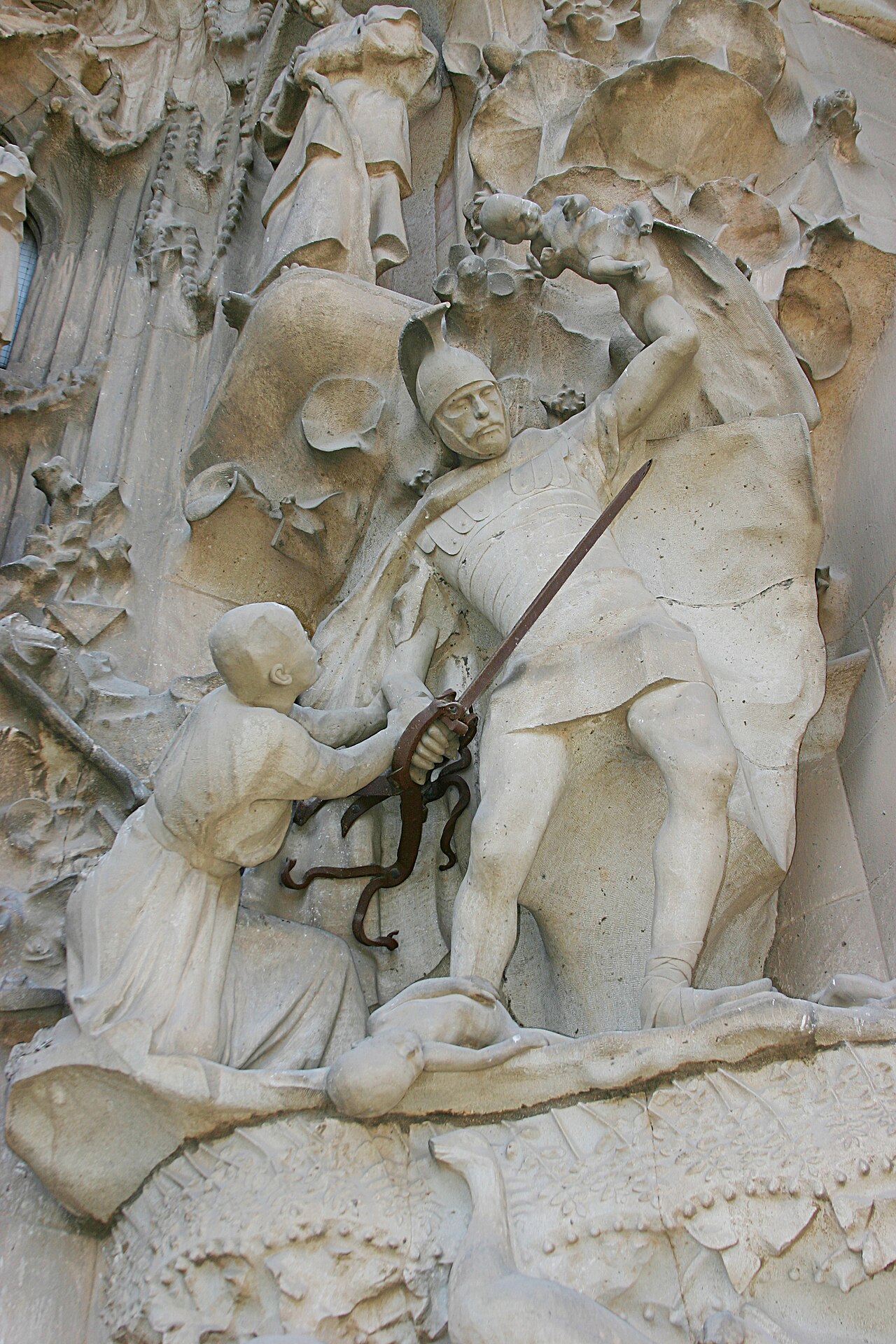
Characters nest in botanical thickets. Animals share stage with saints. Modelling tends toward rounded volumes softened by dense undercutting. Narrative can feel almost polyphonic — many stories sounding at once. The observer’s task is sorting voices without killing the music.
Gesture language here often softens: inclination, shelter, gathering. Hands and draperies communicate care. Even dramatic moments arrive cushioned by surrounding life of stone flora.
- Choose one figure cluster per façade and describe its gesture language in three adjectives before checking any label.
- Compare eye treatment and facial plane-building between Nativity and Passion examples.
- Note how fauna and flora appear or vanish between dialects.
- Sketch voids around figures; negative space reveals each programme’s structural habits.
Disagreement about Passion figuration is old and public. Use controversy as motivation to look longer, not as an excuse to look away. Aesthetic discomfort can refine observation faster than easy charm.
Passion dialect: planar severity
Figures assemble from volumes that feel quarried rather than grown. Faces simplify; drapery becomes plate and fold vector. Emotional tone tightens. Scenes of trial and death sit inside an architecture already speaking of bone and cut. Figuration and setting negotiate in one stern register.
Close looking reveals craft intensity equal to the Nativity’s — different tools, different sympathy, equal seriousness. Measuring “detail count” misses the point; measuring affective temperature does not.
Bridges and unfinished programmes
Not every figurative intervention falls cleanly into Nativity-versus-Passion binaries. Intermediate works, restorations, and developing Glory contributions create bridge dialects. Treat them as chronological seams rather than impurities. The temple is a chronicle; seams belong.
Glory-side figure programmes remain especially provisional for street observers. Watch what is installed, wrapped, or model-indicated. Unfinished figurative promise is part of the contemporary experience.
Interior accents and small looking
Figurative energy continues inside at human and liturgical scale — doors, fittings, secondary sculptures — without matching façade density. After intense exterior reading, quiet interior figurative accents feel like whispers following choir. Give them equal courtesy.
Binoculars help upper registers outdoors; unaided looking suits many interior and porch figures better. Tools should serve patience, not acquisition of more checklist items.
Reading sculpture as conversation
The strongest takeaway is plurality. One basilica, multiple sculptural languages, one continuous theological question. Walk with that conversation in mind: abundance answering austerity, unfinished answering finished, animal answering plane.
Sagrad Family Chronicle keeps this comparative looking editorial and free of commerce. Observe dialect. Refuse urgency. Stone speaks slowly when we do.
Season after season, the same looking practice applies: arrive without commercial urgency, choose a station of attention, and stay until the basilica’s material character — stone temperature, shadow edge, and chromatic weather — becomes more vivid than any checklist of famous names. Barcelona’s light changes quarter by quarter; so does the reading. Returning readers will find that memory and live stone argue productively, refining what seemed finished on a first visit into something more patient and exact.
Sagrad Family Chronicle exists for that slower second look. Keep notes. Compare hours. Let observation outrank acquisition of views. The building rewards those who refuse to hurry past it — on the street, in the nave, or under unfinished southern skies where Glory still gathers its words in stone.
Give another quiet minute to edges, joints, and the way neighboring streets frame the temple’s mass. Small attentions accumulate into a durable memory of Barcelona’s most ambitious sacred silhouette.
Give another quiet minute to edges, joints, and the way neighboring streets frame the temple’s mass. Small attentions accumulate into a durable memory of Barcelona’s most ambitious sacred silhouette.
Give another quiet minute to edges, joints, and the way neighboring streets frame the temple’s mass. Small attentions accumulate into a durable memory of Barcelona’s most ambitious sacred silhouette.
Give another quiet minute to edges, joints, and the way neighboring streets frame the temple’s mass. Small attentions accumulate into a durable memory of Barcelona’s most ambitious sacred silhouette.
Give another quiet minute to edges, joints, and the way neighboring streets frame the temple’s mass. Small attentions accumulate into a durable memory of Barcelona’s most ambitious sacred silhouette.